Citizens of Rome,
Today, I would like to speak about education in ancient Rome, a topic that is still relevant today as we continue to place great importance on education in our modern society.
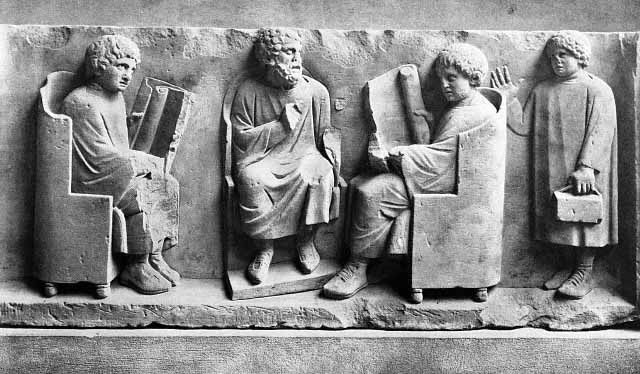
Education in ancient Rome was highly valued, with the wealthy and upper classes making sure their children received a proper education. The Roman educational system was divided into three stages: primary education, secondary education, and higher education.
Primary education was typically taught by the child’s father or a private tutor and focused on basic reading, writing, and arithmetic. Children were also taught to memorize poetry, myths, and stories from Roman history.
Secondary education was reserved for the more privileged and was focused on rhetoric, public speaking, and Latin literature. At this stage, students would also learn about history, geography, and philosophy.
Higher education was only available to the wealthiest and most privileged members of society. These individuals would attend a university, known as a schola, where they would study law, medicine, or philosophy.
One of the most famous educational institutions in ancient Rome was the Sapienza, which was founded in 1303 by Pope Boniface VIII. This institution was dedicated to the study of theology and philosophy and attracted students from all over Europe.
Education was not limited to men in ancient Rome. Wealthy women were also given an education, although it was often more limited than that of men. Women were typically taught basic reading, writing, and arithmetic, as well as household management skills.
In conclusion, education was highly valued in ancient Rome and was seen as essential for success and upward mobility in society. The educational system in ancient Rome laid the foundation for the modern educational system we have today and reminds us of the importance of education in shaping our future.
Thank You.
Citizens of Rome,
Today, I would like to talk to you about family life in ancient Rome, a topic that offers a fascinating glimpse into the customs and traditions of a civilization that still influences us today.
The family was the cornerstone of ancient Roman society. It was the basic unit of social, political, and economic life, and its values and traditions shaped the behavior of individuals, families, and communities.
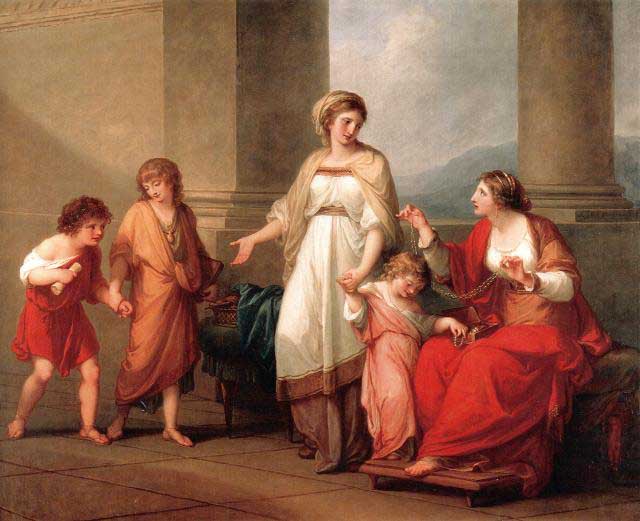
In ancient Rome, the father was the head of the household and had complete authority over his family, including his wife, children, and slaves. He was responsible for their welfare and well-being, and he had the power to make all important decisions concerning their lives.
The mother played an equally important role in ancient Roman family life. She was responsible for managing the household, raising and educating the children, and overseeing the family’s finances. She was also expected to be loyal to her husband and to maintain the family’s reputation and honor.
Children in ancient Rome were highly valued and were seen as the future of the family and society. Boys were taught to be strong, disciplined, and courageous, while girls were trained to be virtuous, modest, and obedient. Education was essential for both boys and girls, and it was the responsibility of the father or a tutor to provide it.
In ancient Rome, marriage was a sacred and formal union that was recognized by the state. It was considered to be a lifelong commitment, and divorce was rare and frowned upon. Marriages were often arranged by families and were based on social, political, and economic considerations rather than love.
In conclusion, family life in ancient Rome was a complex and rich tapestry of traditions, customs, and values that shaped the behavior and attitudes of individuals and communities. Although some of these customs may seem outdated to us today, they remain an important part of our cultural heritage and serve as a reminder of the enduring power of family in shaping our lives.
Thank You.
Citizens of Rome,
Today, I would like to talk to you about religion in ancient Rome, a topic that offers a fascinating glimpse into the beliefs, customs, and practices of a civilization that continues to influence us today.
Religion was an integral part of ancient Roman society. The Romans believed in a pantheon of gods and goddesses, who were responsible for the world’s creation and maintenance. These gods and goddesses were believed to have direct influence over every aspect of human life, from birth to death.
The Roman religion was a polytheistic one, which meant that there were many gods and goddesses who were worshipped in different ways. The most important of these gods were Jupiter, the god of the sky and thunder; Mars, the god of war; and Venus, the goddess of love and beauty.
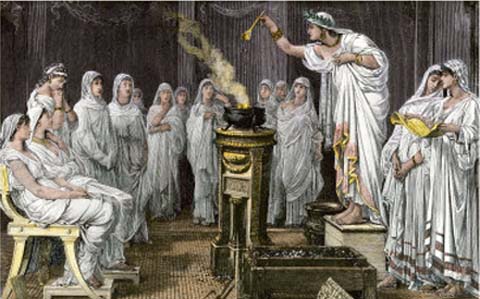
The Romans believed that the gods had to be appeased with offerings and sacrifices, which were performed by priests and priestesses in temples and shrines throughout the city. These offerings included animals, grains, and wine, and they were accompanied by prayers and rituals that were meant to ensure the gods’ favor and protection.
Religion played an important role in ancient Roman society, and it was intertwined with every aspect of life, from politics to social customs. The Roman government also had a significant role in religion, as it provided funding for the temples and supported the priesthoods.
One of the most important religious festivals in ancient Rome was the Saturnalia, which was held in honor of the god Saturn. This festival was a time of great celebration and included feasting, gift-giving, and socializing. It was also a time when social norms were temporarily overturned, and slaves and masters would switch roles.
In conclusion, religion was an essential part of ancient Roman society, and it influenced every aspect of life, from politics to social customs. Although the Roman religion may seem archaic to us today, it remains an important part of our cultural heritage and serves as a reminder of the enduring power of faith and spirituality in shaping our lives.
Thank You.
 Ancient Rome